
Taking Cara Babies
Background
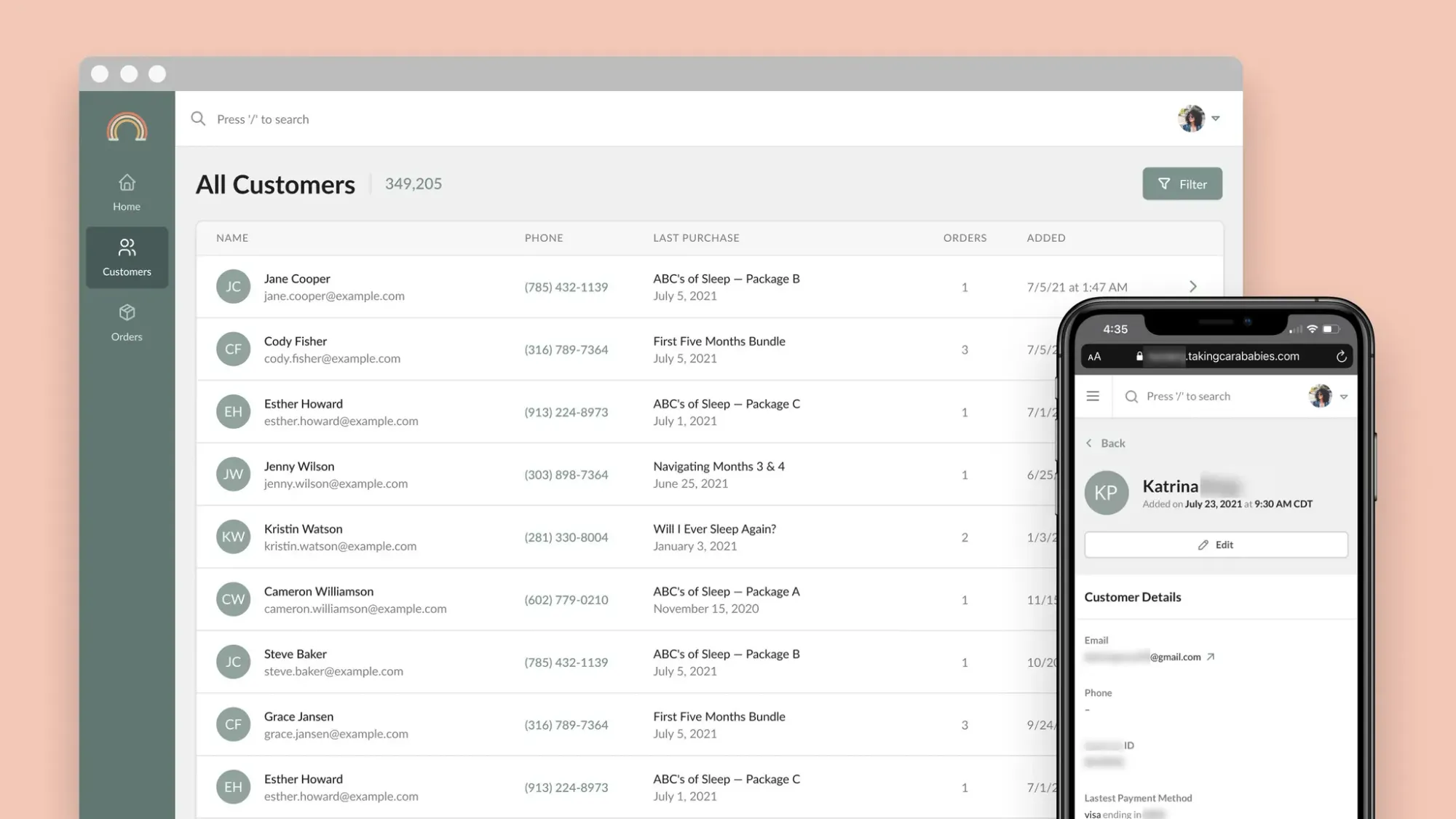
Taking Cara Babies is an industry giant. Built on a strong basis of trust through social media, they've helped countless parents navigate the exhausting world of infant sleep training. But behind the polished Instagram presence, their operations were held together with digital duct tape.
Since 2015, the company had been running on common off-the-shelf tools stitched together with Zapier integrations. For a while, it worked. But as their customer base exploded, so did the complexity. Zapier workflows were breaking. Customer data lived across multiple systems. Support staff were constantly context-switching between platforms just to answer a simple question.
They needed a custom CRM that could integrate their scattered third-party applications into a single source of truth. The catch, for me, is that I would only be the product designer for the first sprint. Whatever foundation I built had to be strong enough for the development team to build on without me.
Designing for What Comes Next
A single sprint is a tight constraint. The temptation is to focus entirely on immediate deliverables. But I knew that designing only for Sprint 1 would leave the team scrambling later.
Before sketching a single interface, I worked with our developers and dove into the API documentation for each third-party system. Understanding what data was available—and how it connected—was essential to designing something that would actually work in production.
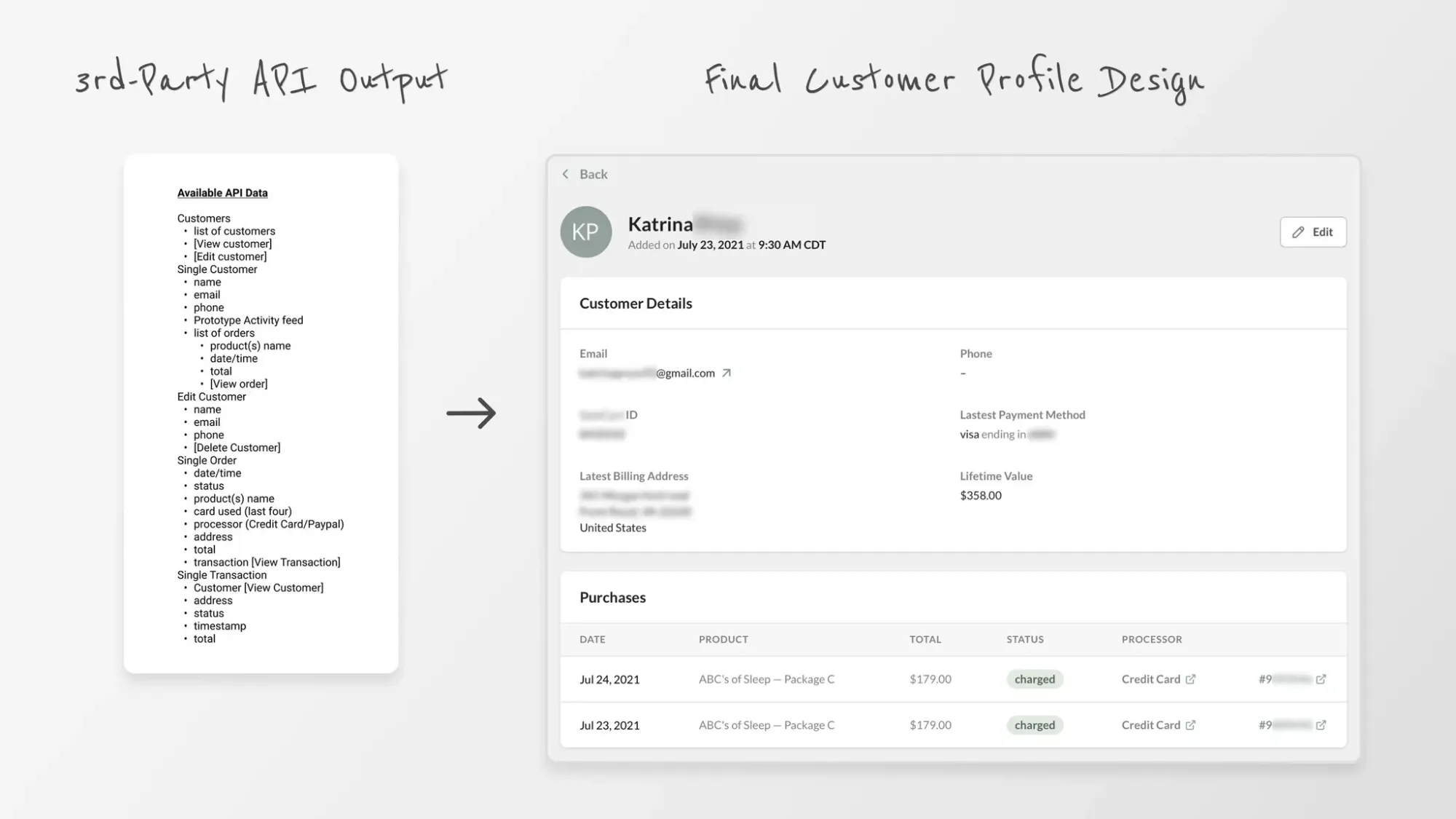
The customer profile interface became the project's centerpiece. By mapping out available data from multiple sources, I designed a unified view that surfaced the most critical information without overwhelming users. Email, phone, purchase history, payment methods—everything customer support would need, consolidated into one clean interface.
Building Design Runway
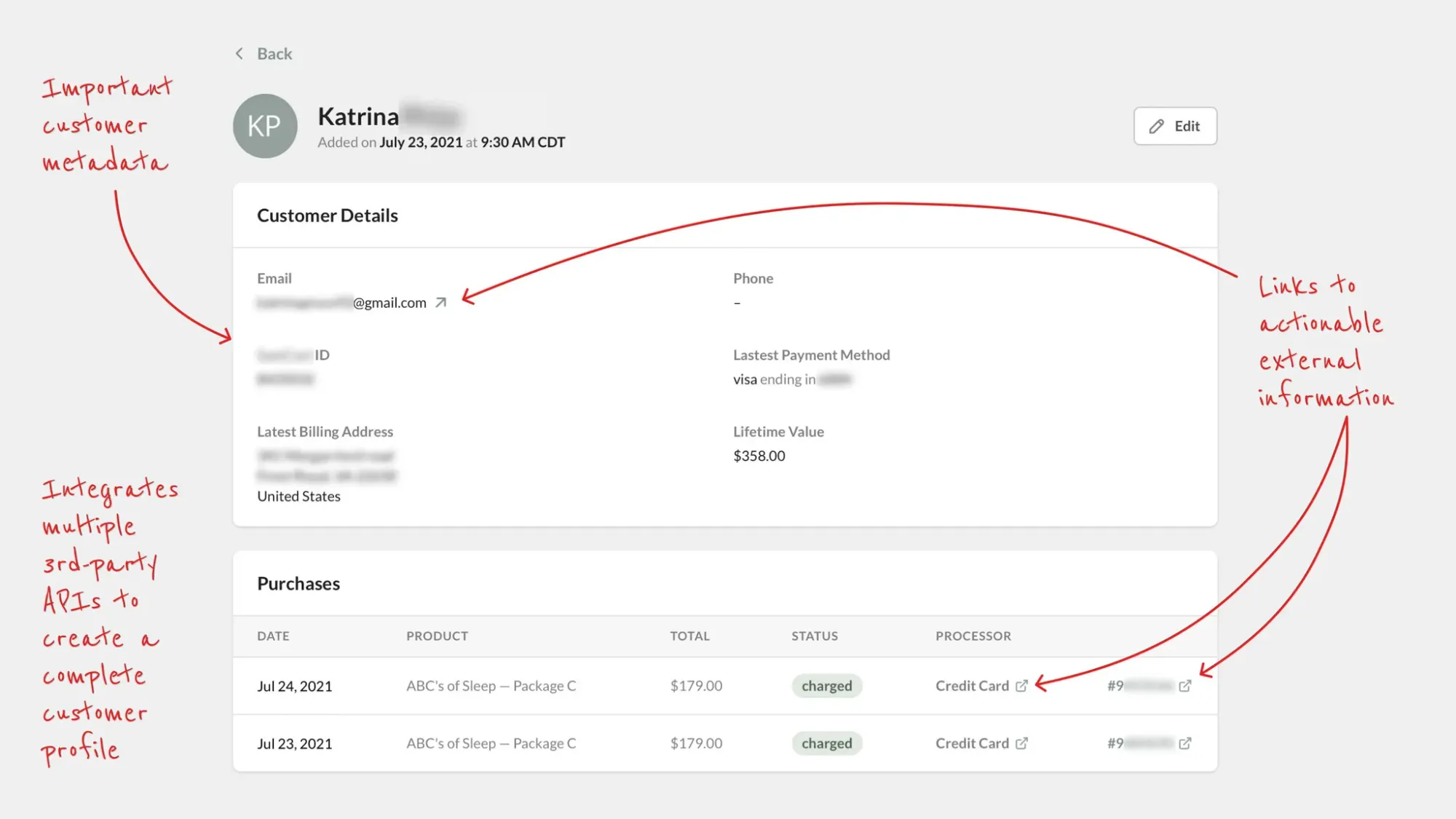
With limited time on the project, I made a deliberate choice: design for the features we weren't building yet.
I studied the backlog. I looked at what was slated for Sprint 2, Sprint 3, and beyond. Then I designed Sprint 1's interfaces with placeholders and scalable layouts that would accommodate those future additions naturally.
This approach—what I call creating "design runway"—gave the development team room to grow. They wouldn't need to redesign core interfaces every time a new feature landed. The architecture was ready.
Translating Brand to Interface
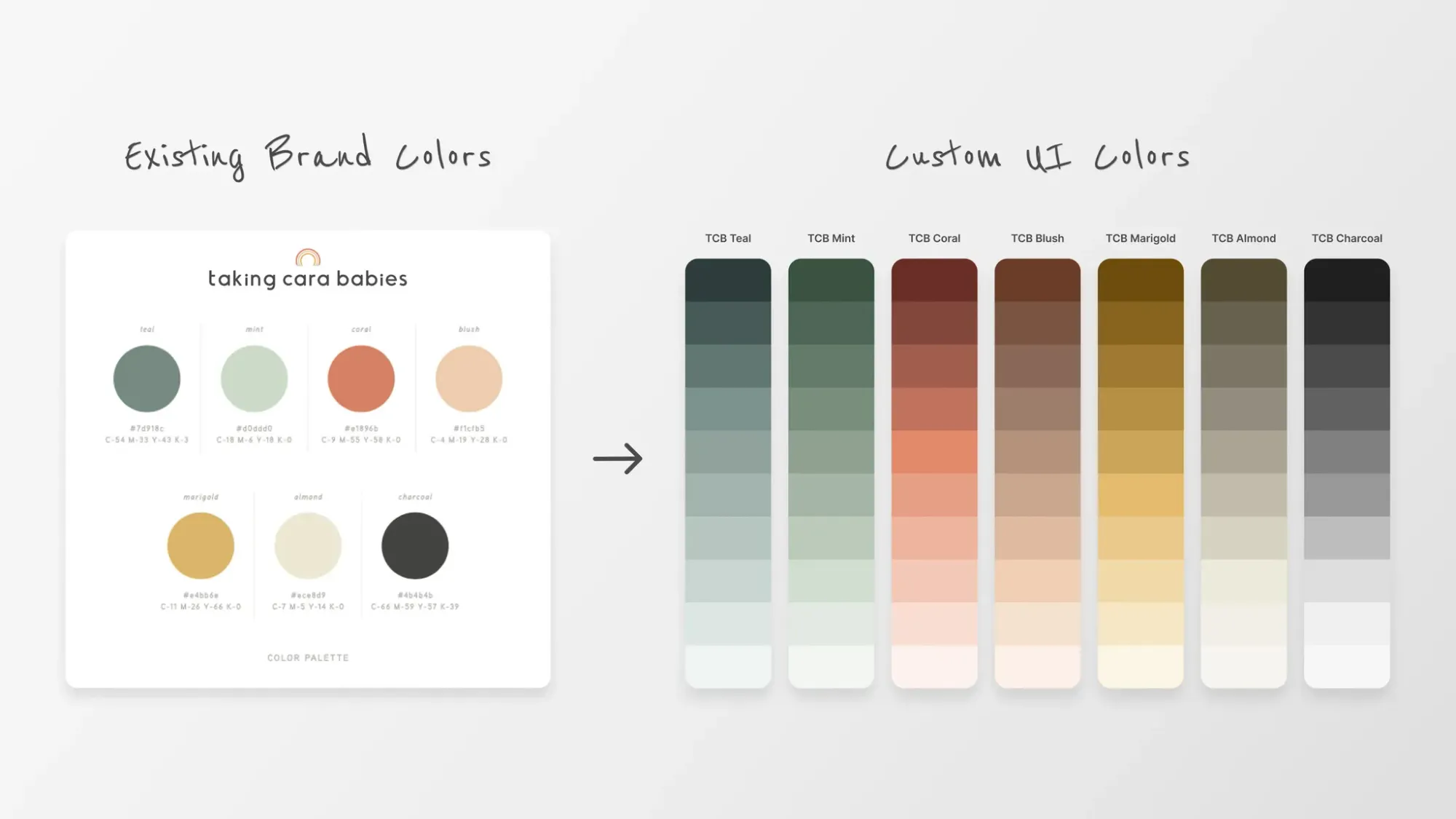
Taking Cara Babies has a distinctive visual identity. It's soft, approachable, and trustworthy. Their brand guidelines included a beautiful color palette, but like most brand guides, it wasn't designed for the demands of software interfaces.
I extended their existing colors into a comprehensive UI palette. Each brand color became a scale of shades optimized for accessibility standards, proper contrast ratios, and the practical needs of buttons, alerts, form states, and data visualization.
The result was an interface that felt unmistakably like Taking Cara Babies while meeting the broad and cascading needs of a professional software application.
The Results
A careful but decisive approach to design has empowered Taking Cara Babies’ custom CRM to grow successfully. Now several sprints in, the development team has continued adding new features using the design patterns and resources I established in Sprint 1.
✦ 350,000+ customers from across 3rd party systems, managed in one centralized place
✦ Extensible foundation — Design patterns from Sprint 1 continued to guide development across subsequent sprints
✦ Unified customer view — Consolidated data from multiple third-party APIs into a single, actionable interface
✦ Accessible UI palette — Extended brand colors into a complete system meeting contrast and accessibility standards
✦ Reduced context-switching — Support staff gained single-pane access to customer information previously scattered across multiple tools
What I Learned
Short engagements demand long-term thinking. It's tempting to optimize for what you're shipping first. But designing with future features in mind creates compounding value, meaning the team can move faster long after you're gone.
API documentation is a design tool. Understanding the shape of available data before designing interfaces prevents painful surprises during implementation. When you know what's possible, you can design what's practical.
Brand systems need UI extensions. Marketing color palettes rarely account for the demands of software interfaces. Taking time to systematically extend brand colors into accessible UI scales pays dividends across the entire product.
Constraints clarify priorities. The limitation of my one sprint on the project forced a ruthless focus on what mattered most. The foundation had to be right because there wouldn't be time for me to fix it later.
Let's Design Your Product
Looking for a product design partner on your next project? I take on select freelance work and welcome new collaborations.
Project Details
Team: 2 developers, 1 designer (me)
Company: Moonbase Labs (agency)
Client: Taking Cara Babies
Responsibilities:
- Map third-party API data structures
- UI/UX design for integrating multiple data sources
- Created scalable layouts with placeholders for future features
- Interface color system design
- Design pattern development for independent use by developers